

Provably Fair Play: How Blockchain Tech Is Redefining Plinko Casinos

plinko

Every ball drop in Plinko tells a story of chance and precision, but now, it also tells a story of technology and trust. As online gaming evolves, transparency has become just as valuable as luck. Blockchain is transforming how digital gambling platforms operate, bringing fairness and verification into games like Plinko through a concept known as “provably fair gaming.”

Modern plinko casinos are no longer just about colorful pegs and falling balls. They now use blockchain’s immutable ledger to record each drop’s randomness and outcome. This technology makes it possible for players to verify every result themselves, removing the need for blind trust in a casino’s algorithm. For tech-minded players, this shift feels like a long-overdue breakthrough in how fairness should work in digital gambling.

How Blockchain Ensures Fairness in Plinko Outcomes

At the heart of blockchain-based Plinko lies a cryptographic process that keeps outcomes transparent. Every Plinko drop is generated using a hash function that combines server data with a player’s seed, creating a random result that cannot be altered once the game begins. This means neither the casino nor the player can influence the result mid-game. The cryptographic proof remains stored on the blockchain for anyone to verify, ensuring complete transparency.

“Provably fair” means that the fairness is not just claimed, it is mathematically proven. Blockchain prevents manipulation, because each transaction or game result is time-stamped and stored on a decentralized network. Players can cross-check outcomes against their own input seeds, providing a level of trust traditional online casinos could never match.

The Role of Crypto Wallets and Fast Payments

Blockchain integration does more than verify fairness, it revolutionizes how players handle money online. Crypto wallets allow users to deposit, play, and withdraw without relying on banks or credit cards. Payouts become almost instant, with no third-party approval delays. For frequent gamblers, this speed and privacy make the experience smoother and more secure.

Using cryptocurrencies also gives players global access. Whether you are in Asia, Europe, or South America, blockchain-based gaming platforms connect you directly to the casino, bypassing local banking restrictions. That level of freedom is one of the key reasons blockchain gambling has grown so fast over the last few years. To learn more about how innovation is using new technology to make gambling safer, explore the latest insights on responsible gaming advancements.

Why Plinko Appeals to Tech-Savvy Gamblers

Plinko has always been about suspense, strategy, and satisfaction, and blockchain adds a digital twist that tech lovers appreciate. Unlike games where odds feel hidden, blockchain-powered Plinko makes everything traceable. Players can check the fairness of every bounce, creating a transparent environment where knowledge replaces blind faith.

Tech-savvy gamblers are drawn to this kind of empowerment. They value systems where algorithms are open, not concealed. Add to that the simplicity of Plinko’s gameplay, and it becomes the perfect entry point for anyone curious about blockchain gaming. It is casual, fast-paced, and verifiable—qualities that match today’s demand for both entertainment and authenticity.

Emerging Plinko Versions on Decentralized Platforms

The next generation of Plinko games is being built entirely on decentralized gaming platforms. These platforms run through smart contracts, which automatically execute bets and payouts based on pre-coded rules. There is no need for a central authority, which means fewer middlemen and fewer chances for tampering. Smart contracts ensure that once the ball drops, the payout happens instantly and accurately.

Developers are also experimenting with hybrid versions that combine NFTs and reward-based systems. Some decentralized Plinko games even reward users with tokens or collectibles for consistent play. This gamified economy keeps users engaged while promoting transparency at every level.

The Future of Fair Play in Plinko

Fairness, transparency, and trust—these are no longer optional in online gambling. They are the future of every drop in the digital Plinko board.

Blockchain is not just a feature—it is becoming the foundation of a new era in online gambling. As plinko casinos continue to evolve, the promise of provably fair play will set the standard for future games. Players can now trust that what happens on the screen reflects true randomness, backed by code rather than corporate claims.

Cryptographic algorithms, instant crypto payments, and decentralized networks are reshaping the casino experience. Blockchain has taken an old game of chance and given it a new level of credibility. For players who value fairness and innovation, this tech-driven version of Plinko is a perfect symbol of where gambling is headed next.
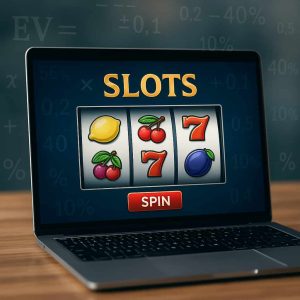
What Is Expected Value (EV) and How Can You Use It in Online Slots?

If you’ve ever wondered why some players seem to win more often or play more strategically at online slots, especially those looking for a slot gacor or a “hot” machine, chances are they understand something called Expected Value (EV). It’s not a magic formula that guarantees wins, but it does help you make smarter decisions about which games to play and how to bet.

In short, expected value tells you what you can expect to win or lose on average for every dollar you wager. Let’s break that down simply and see how you can use it when playing online slots.

What Expected Value Means

Everhttps://www.xprizecup.com/how-ai-and-big-data-could-change-the-way-malaysiy casino game has a built-in house edge. That’s how casinos make money over time. EV is the math behind that idea. It measures the average outcome of a bet if you made it over and over again.

If a slot has an expected value of –0.05, that means that for every $1 you bet, you’ll lose an average of 5 cents in the long run. You might win on some spins and lose on others, but over thousands of spins, that’s the statistical expectation.

A positive EV (+EV) means that, theoretically, the player has an edge. This is rare in slots since most are designed with a negative EV. However, promotions, bonuses, and certain progressive jackpots can occasionally create short-term situations where the EV is positive.

The Basic EV Formula

Here’s the general formula for expected value:

EV = (Probability of Winning × Amount Won) – (Probability of Losing × Amount Lost)

Let’s apply it to a simple example.

Imagine a slot where:

  • You bet $1 per spin.
  • You have a 1 in 5 chance (20%) to win $5.
  • You lose your $1 bet 80% of the time.

Plug that into the formula:

EV = (0.2 × $5) – (0.8 × $1)
EV = $1 – $0.80
EV = +$0.20

That’s a positive expected value of 20 cents per spin. Over time, you’d expect to profit.

Of course, that’s a simplified example. In real slots, there are dozens or even hundreds of possible outcomes with different probabilities and payouts. Still, the same principle applies. EV is the average result of those outcomes.

EV and RTP: How They’re Connected

You’ve probably seen “RTP” listed on slot info screens. RTP stands for Return to Player, usually expressed as a percentage. It’s another way of showing EV, just in a more user-friendly format.

For instance:

  • A slot with a 96% RTP means that over the long run, players get back $0.96 for every $1 bet.
  • The house edge (and the EV from the casino’s side) is 4%.

In EV terms, that means:
EV = –0.04 × Bet Size
If you’re betting $1, your expected value is –$0.04 per spin.

That may not sound like much, but over thousands of spins, it adds up.

Knowing this number helps you compare games. A slot with a 97% RTP is statistically better than one at 94%, even though both are technically negative EV plays.

How to Estimate EV in Real Play

Online slots don’t always publish the full breakdown of payouts and probabilities, but you can still make rough estimates.

1. Use RTP as Your Baseline

If you know the RTP, you already have a general sense of the game’s EV.
For example, a 96% RTP slot has an EV of –4%. That means, on average, you lose 4 cents for every dollar you wager.

2. Adjust for Bonuses and Promotions

This is where EV becomes interesting.
If a casino offers a deposit bonus, free spins, or cashback, these can temporarily change your expected value.

Let’s say you get 50 free spins worth $0.20 each, and the slot has a 96% RTP.
Your total wagered amount = $10
Expected return = $9.60
You didn’t pay for the spins, so your EV is +$9.60.

Of course, wagering requirements and withdrawal limits can reduce that number, but it still gives you a framework for judging whether a promo is worth your time.

3. Consider Jackpot Potential

Progressive jackpots can sometimes tilt EV into positive territory.
If a jackpot keeps growing without a winner, the potential payout might become large enough that, statistically speaking, the average return exceeds 100%.

That’s what advantage players look for: rare +EV opportunities created by jackpots or promotions.

Spotting Positive EV Plays

Finding a true +EV slot situation isn’t easy, but here are a few practical tips:

1. Look for High RTP Slots

Stick to games with RTPs of 96% or higher.
It won’t make you a guaranteed winner, but it minimizes losses and stretches your bankroll.

2. Watch for Special Casino Offers

Bonuses, cashback deals, and free spins often improve EV.
A 10% cashback, for example, effectively raises your RTP by 10% of your losses.

So, if you’re playing a 95% slot with 10% cashback, your effective EV becomes:
–5% + (10% of 5%) = –4.5%
Still negative, but slightly better.

3. Track Progressive Jackpots

Some online communities and data sites track progressive jackpots that have grown large enough to make a game +EV.
These are rare, but they do happen, especially with wide-area progressives.

4. Avoid Low RTP “Feature Buys”

Many modern slots let you pay extra to trigger bonus rounds instantly.
While tempting, these often have lower RTPs than the base game, turning already negative EV into worse odds.

How to Think About EV When You Play

Expected value is about long-term averages, not short-term luck.
Even if you understand EV perfectly, you can still hit a huge jackpot or go on a cold streak.

The point isn’t to remove luck from the game, but to make informed choices that favor you over time. Knowing EV helps you:

  • Choose better-paying games.
  • Avoid poor value bets.
  • Recognize when a promotion truly benefits you.
  • Treat slots as entertainment, not as a source of income.

Final Thoughts

Expected value is one of the most useful concepts in gambling math, and it applies perfectly to online slots.
While you can’t change the house edge, understanding EV gives you the power to play smarter by choosing games and offers that give you the best return possible.

The next time you spin, think of EV as your silent partner. It doesn’t promise wins, but it helps you spot value, play with purpose, and make every bet count.

Using Neural Interfaces in Casino Games

Think about a time when you could play your favorite casino games with just your thinking. Neural interfaces, a technology that links our thoughts straight to a computer, make this possible. It may sound like science fiction, but this might become a reality that changes the whole casino gambling industry. It promises to change the way we play by making it more immersive and accessible.


Brain Tech Meets Casino Play: Thinking the Game


The New Frontier of Communication

Brain-Computer Interfaces (BCIs) are neural interfaces that could totally change how people play games in both online and real-life casinos.

Players might think about their next move instead of using a mouse, a joystick, or a physical button. This device would read a player’s brain waves to deal a card, put a bet, or press a button. It lets gamers with physical problems completely participate in ways that were hitherto unimaginable. There are no more physical obstacles, and the interaction with the game is smoother and more natural.


The Issues and Ethical Dilemmas

BCIs in gambling can be fun at the same time raise a lot of worries. The technology is still new, and utilizing it in high-stakes situations is very risky. One mistake in a brain signal might cost a lot of money. There are also moral issues about privacy and fairness. If a system can read thoughts, may it be exploited to get ahead? These kinds of problems make people question safety, honesty, and the possibility of new types of addiction.


Last Thoughts

Neural interfaces are a revolutionary new technology that could change the way people gamble. The idea of playing through thinking alone is getting closer to becoming a reality, even though there are still technological and moral problems to tackle. This new idea could change the way people play games forever.